Florence, Italy
Piazza della Signoria
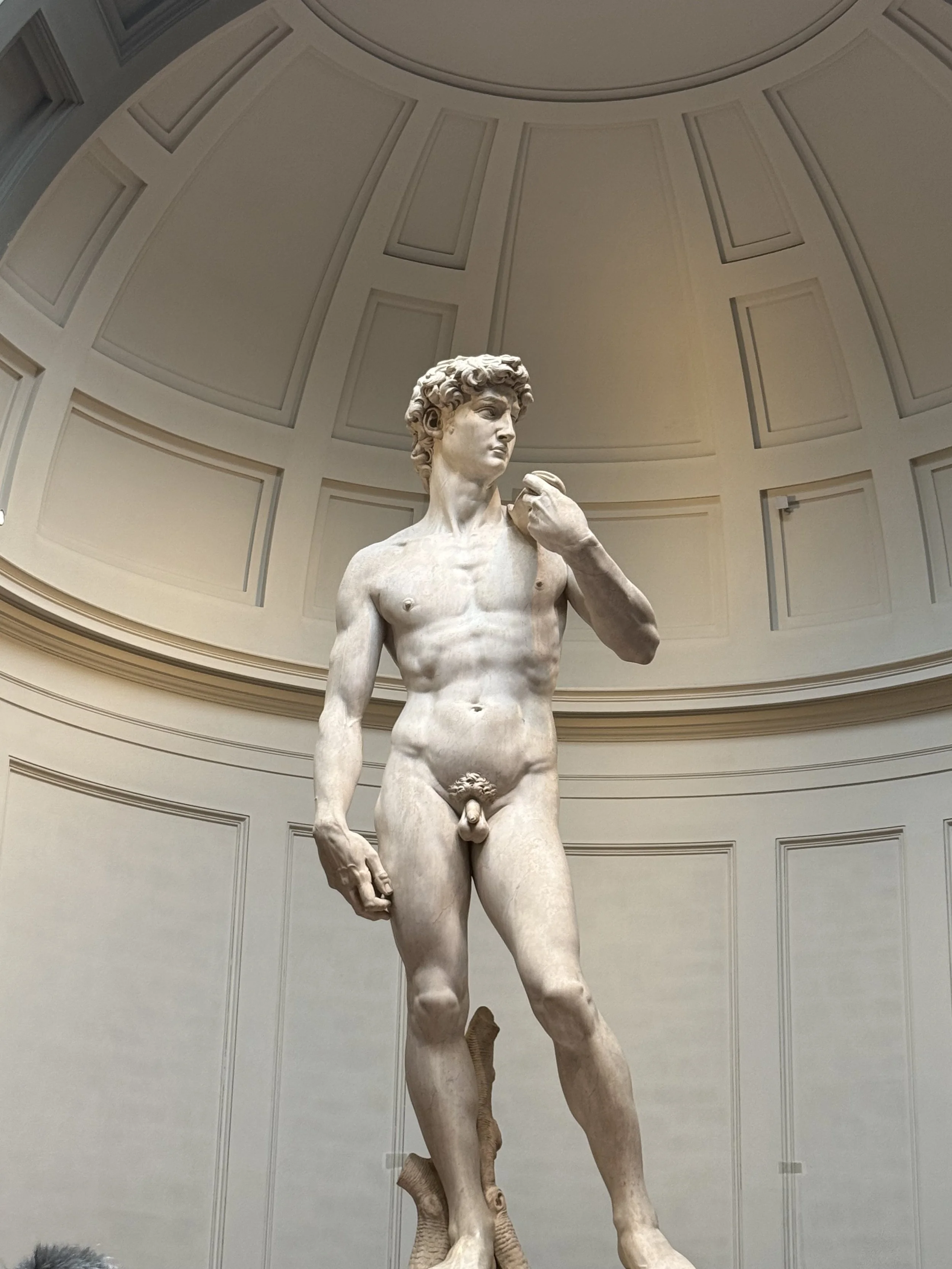
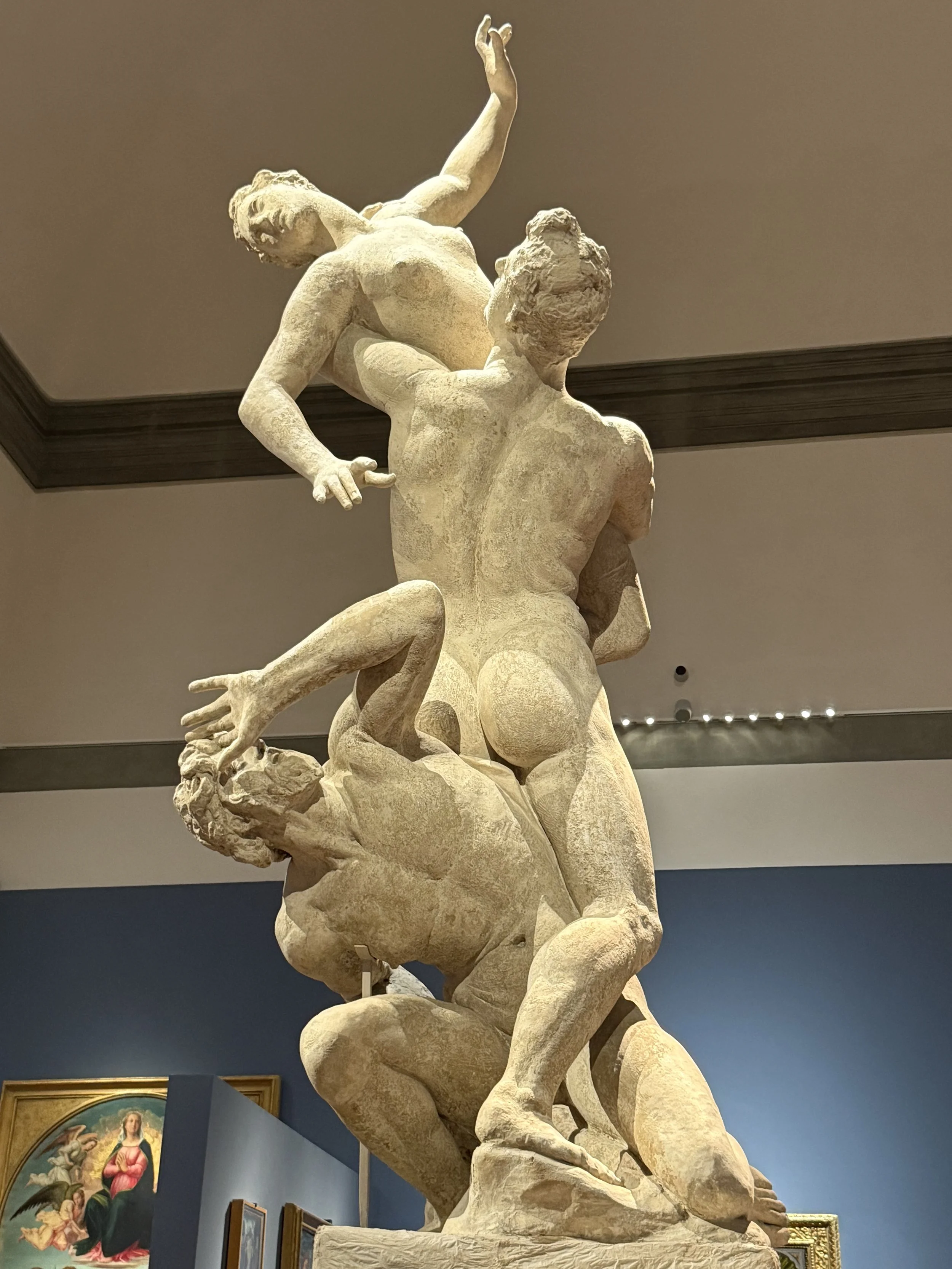
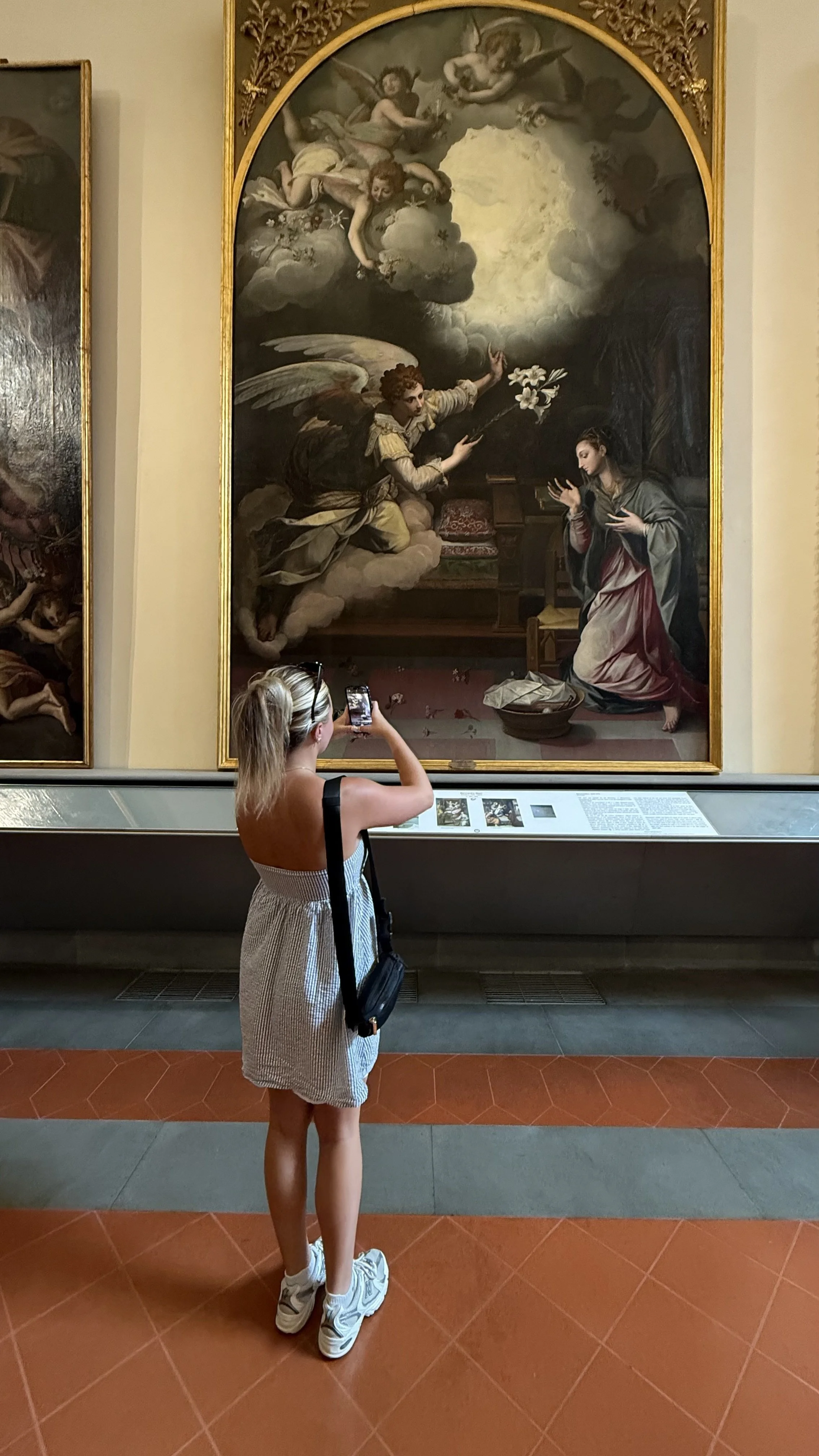
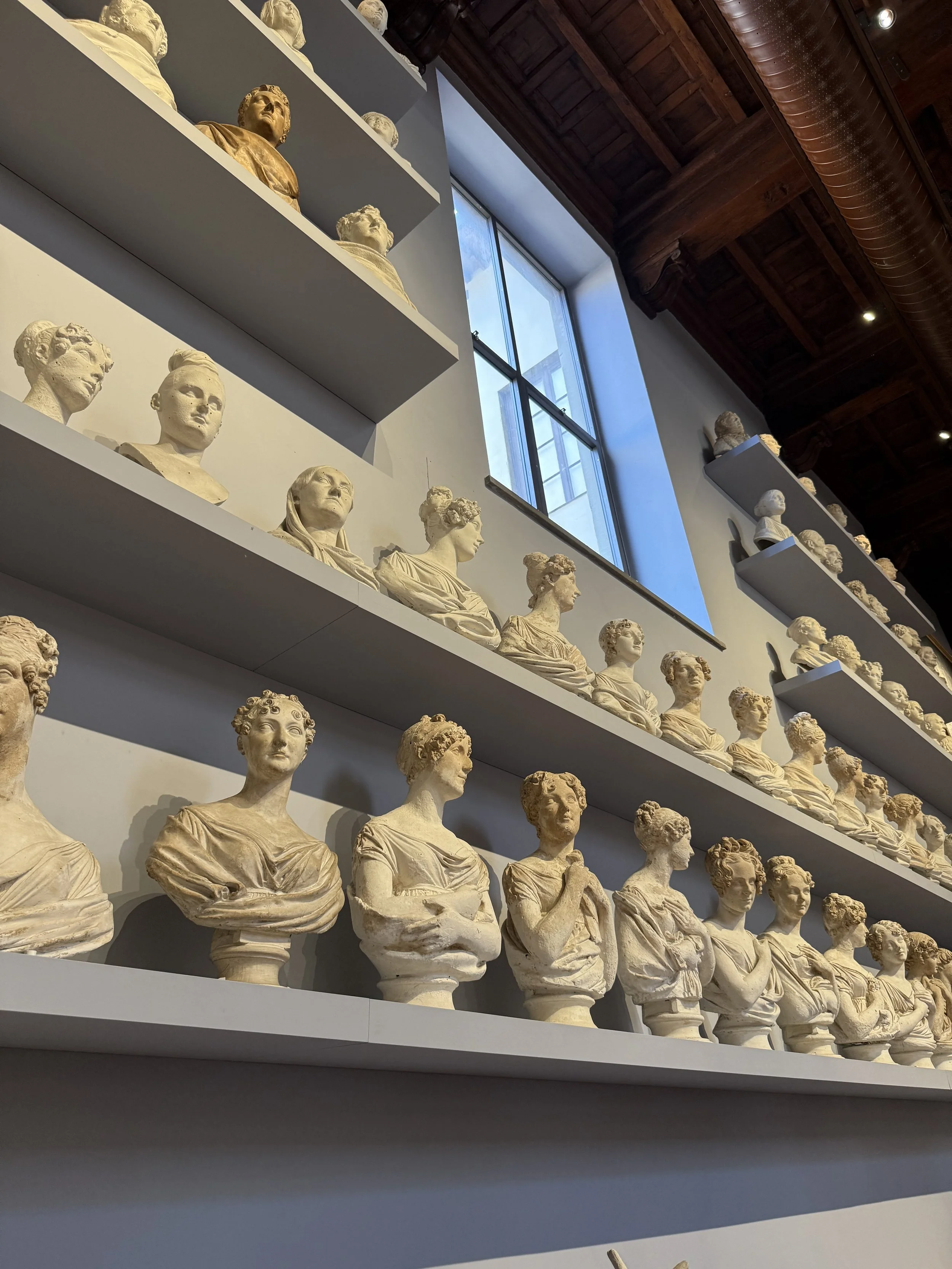
The Accademia Gallery, or Galleria dell’Accademia, is one of Florence’s most famous museums and is best known as the home of Michelangelo’s David. Although the museum is smaller than the Uffizi Gallery, it holds an extraordinary collection of Renaissance art. Michelangelo created David between 1501 and 1504 from a single block of Carrara marble. Standing more than 17 feet tall, the sculpture depicts the biblical hero David moments before his battle with Goliath. Rather than showing him after his victory, Michelangelo captured David in a state of intense concentration. His tense muscles, focused expression, and carefully detailed anatomy represent courage, intelligence, and the ideals of the Italian Renaissance. The journey toward David is almost as impressive as the sculpture itself. Visitors walk through the museum’s Hall of the Prisoners, where Michelangelo’s unfinished sculptures appear to be emerging from blocks of marble. These works offer a fascinating look into his creative process and show how he believed the figure already existed within the stone and simply needed to be released. Beyond Michelangelo’s masterpieces, the Accademia contains paintings by Florentine artists such as Sandro Botticelli, Domenico Ghirlandaio, and Andrea del Sarto. The museum also displays religious artwork, historic musical instruments, and sculptures that reveal Florence’s remarkable artistic development. Visiting the Accademia Gallery is essential for anyone interested in Renaissance art. Photographs cannot fully capture the enormous scale, intricate details, and commanding presence of David.
The Duomo
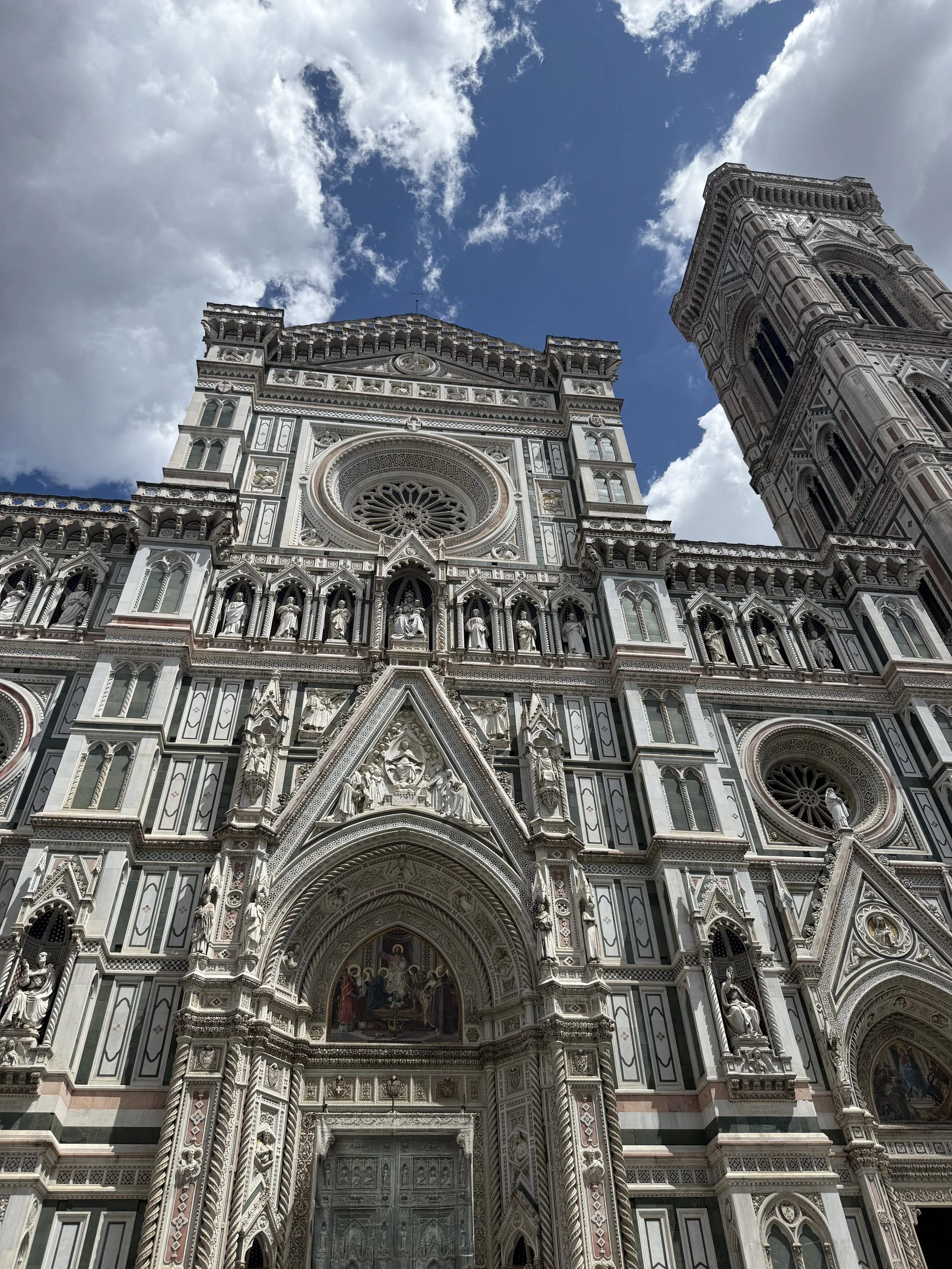
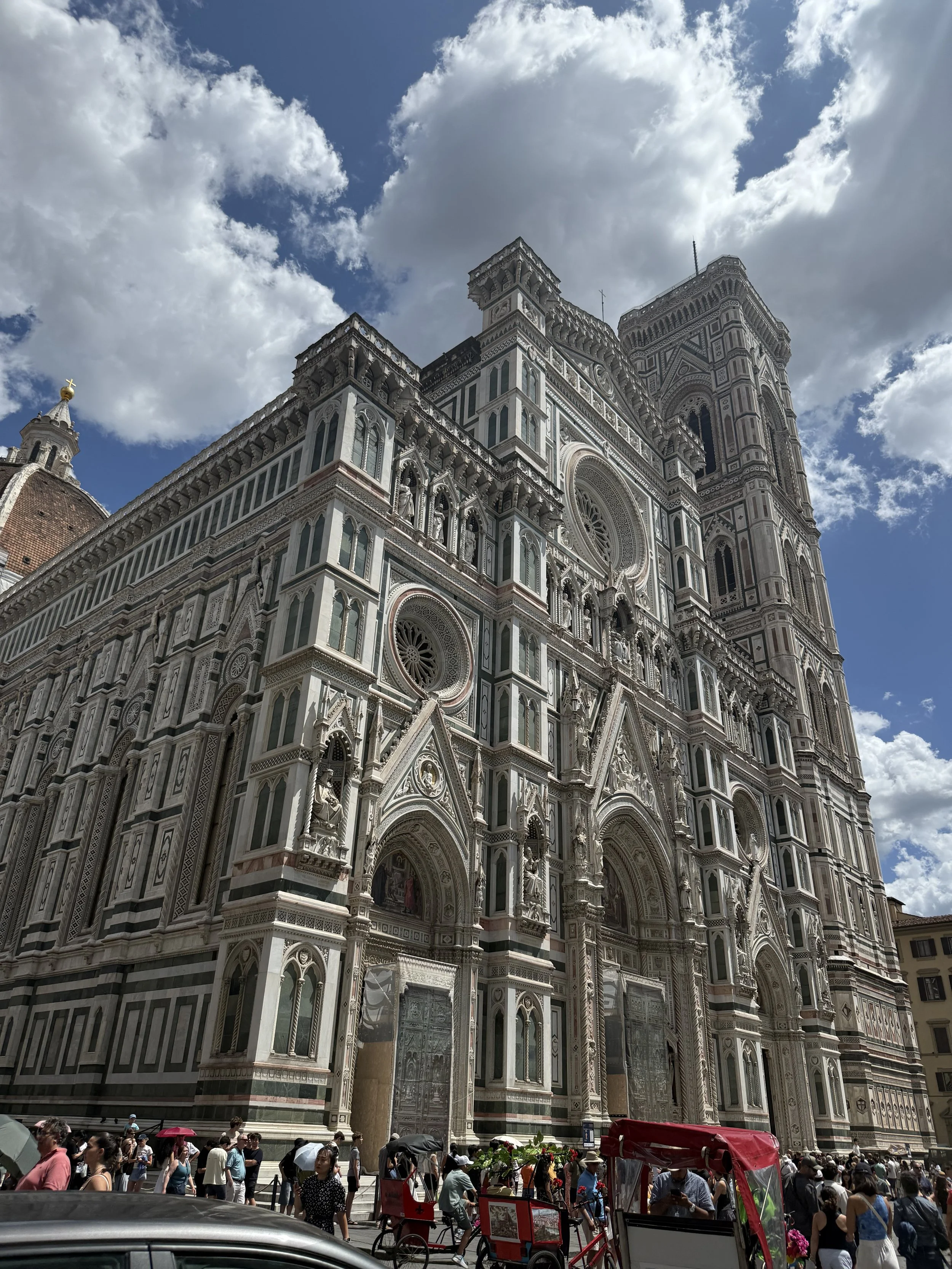
Rising above Florence’s terracotta rooftops, the Cathedral of Santa Maria del Fiore, also known as the Duomo. Construction of the cathedral began in 1296 under architect Arnolfo di Cambio and continued for more than a century. Its exterior is decorated with intricate geometric patterns made from green, white, and pink marble. Although the façade appears medieval, it was completed in the 19th century in the Gothic Revival style, designed to complement the cathedral’s original architecture. The Duomo’s most impressive feature is Filippo Brunelleschi’s magnificent dome. Completed in 1436, it was the largest masonry dome ever constructed and remains an extraordinary engineering achievement. Brunelleschi developed an innovative double-shell design and used a herringbone brick pattern to build the dome without traditional wooden supports. Visitors can climb 463 steps to the top for breathtaking views over Florence. Next to the cathedral stands Giotto’s Bell Tower, decorated with the same colorful marble. Across the piazza is the Baptistery of San Giovanni, famous for its octagonal shape and golden mosaics. Its bronze eastern doors, created by Lorenzo Ghiberti, became known as the “Gates of Paradise.” Inside the cathedral, visitors can admire Giorgio Vasari and Federico Zuccari’s dramatic fresco of The Last Judgment, which covers the interior of the dome. The nearby Duomo Museum also displays original sculptures and artworks created for the cathedral complex. Next time I visit Florence, I definitely want to go inside the cathedral, as we didn’t have time to do so.
Benvenutos Cellinis Perseus with the Head of Madusa
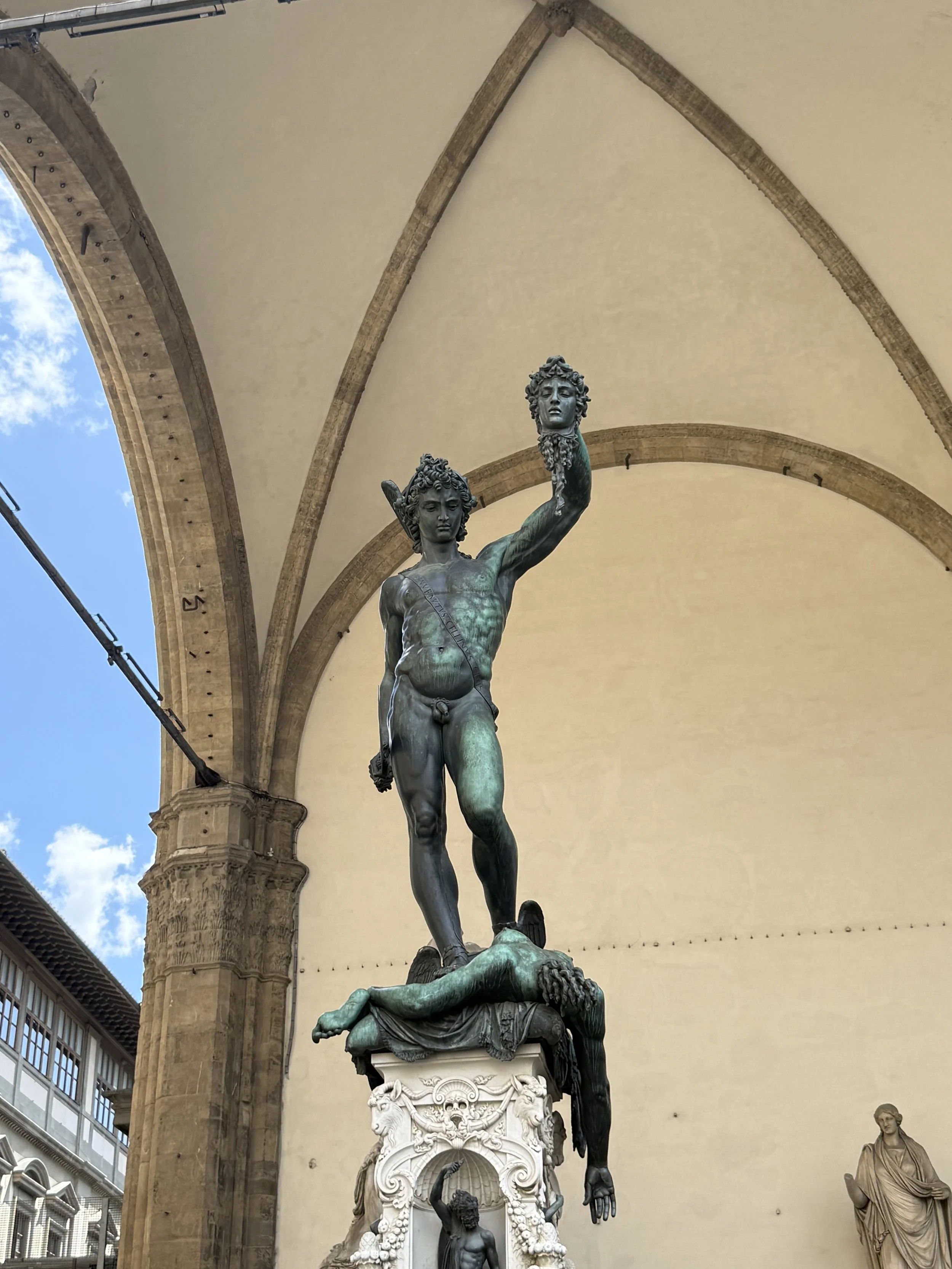
Standing beneath the arches of Florence’s Loggia dei Lanzi, Benvenuto Cellini’s Perseus with the Head of Medusa is one of the city’s most dramatic Renaissance sculptures. Created between 1545 and 1554, the bronze masterpiece depicts the Greek hero Perseus raising Medusa’s severed head while standing triumphantly over her body. The sculpture captures the story’s most intense moment, with Medusa’s twisting figure beneath Perseus and streams of bronze blood flowing from her neck. The statue was commissioned by Cosimo I de’ Medici, the powerful Duke of Florence. Beyond representing the mythological victory of good over evil, it also carried a political message. Perseus’s defeat of Medusa symbolized the Medici family’s authority over its opponents and reinforced Cosimo’s position as Florence’s ruler. Its placement in the Piazza della Signoria, surrounded by other sculptures representing power, conflict, and victory, made that message especially clear. Cellini’s ability to cast the towering sculpture in a single piece of bronze was an extraordinary technical achievement. Perseus’s carefully detailed muscles, winged helmet, sword, and confident expression demonstrate the elegance and theatricality of Mannerist art. Cellini even included a small self-portrait on the back of Perseus’s helmet.
Cosimo I de’medici
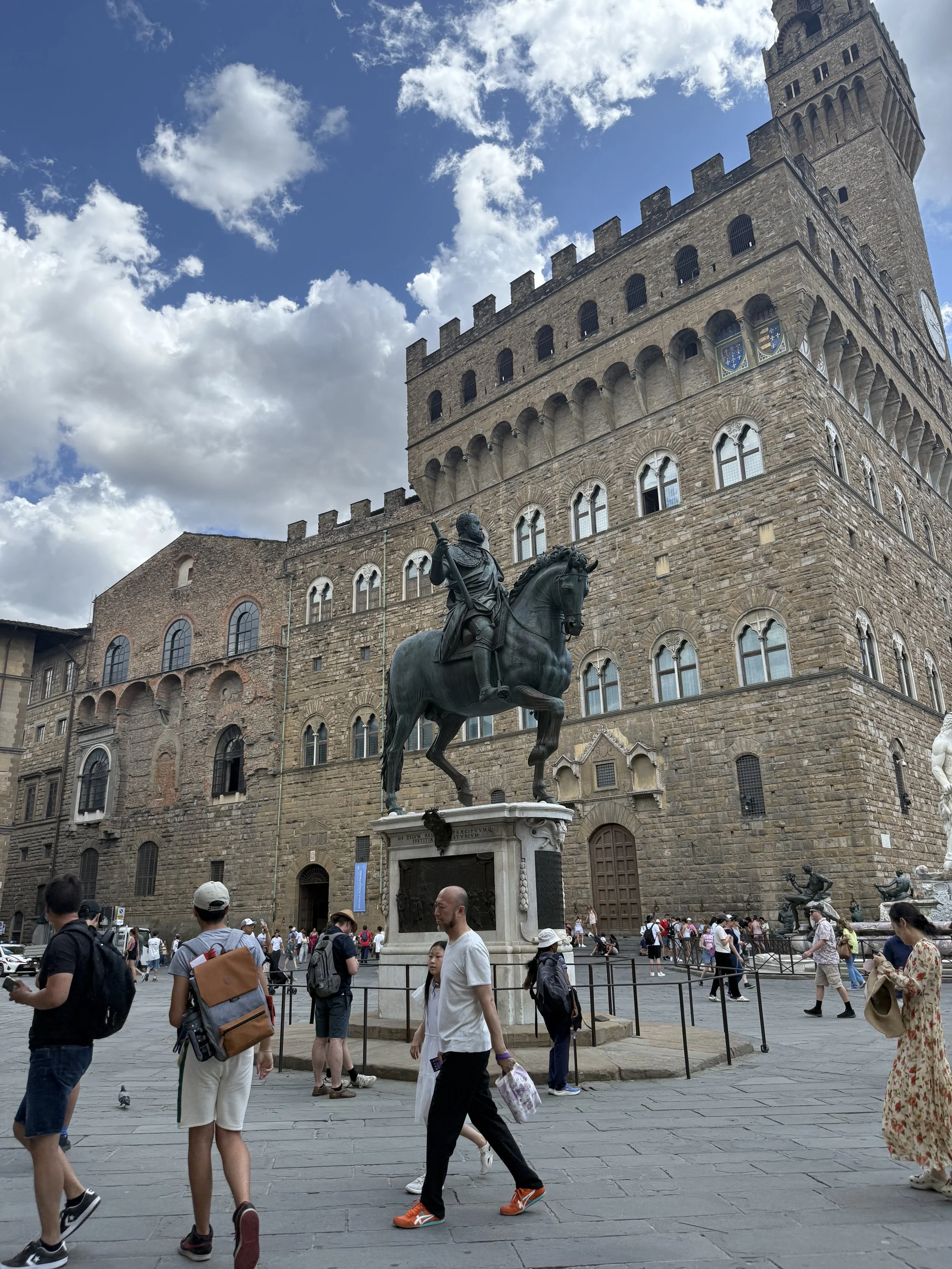
Cosimo I de’ Medici was one of the most influential rulers in Florence’s history. He became Duke of Florence in 1537 at only seventeen years old and later became the first Grand Duke of Tuscany. Through political skill, military strength, and strategic alliances, Cosimo transformed Florence from a divided republic into the center of a powerful Tuscan state. Cosimo was also an important patron of art and architecture. He employed artists such as Giorgio Vasari and Benvenuto Cellini to create works that celebrated the strength of the Medici family. Under his rule, the Palazzo Vecchio was renovated, the Uffizi was constructed as government offices, and the Vasari Corridor was built to connect the Palazzo Vecchio with the Medici residence at the Palazzo Pitti. He also commissioned Cellini’s Perseus with the Head of Medusa, which symbolized victory over political enemies. Today, Cosimo is commemorated by the grand equestrian statue in the Piazza della Signoria. Created by Giambologna and completed in 1594, the bronze monument portrays him confidently riding a horse. Reliefs on the statue’s base represent important moments from his rule.
Tuscany
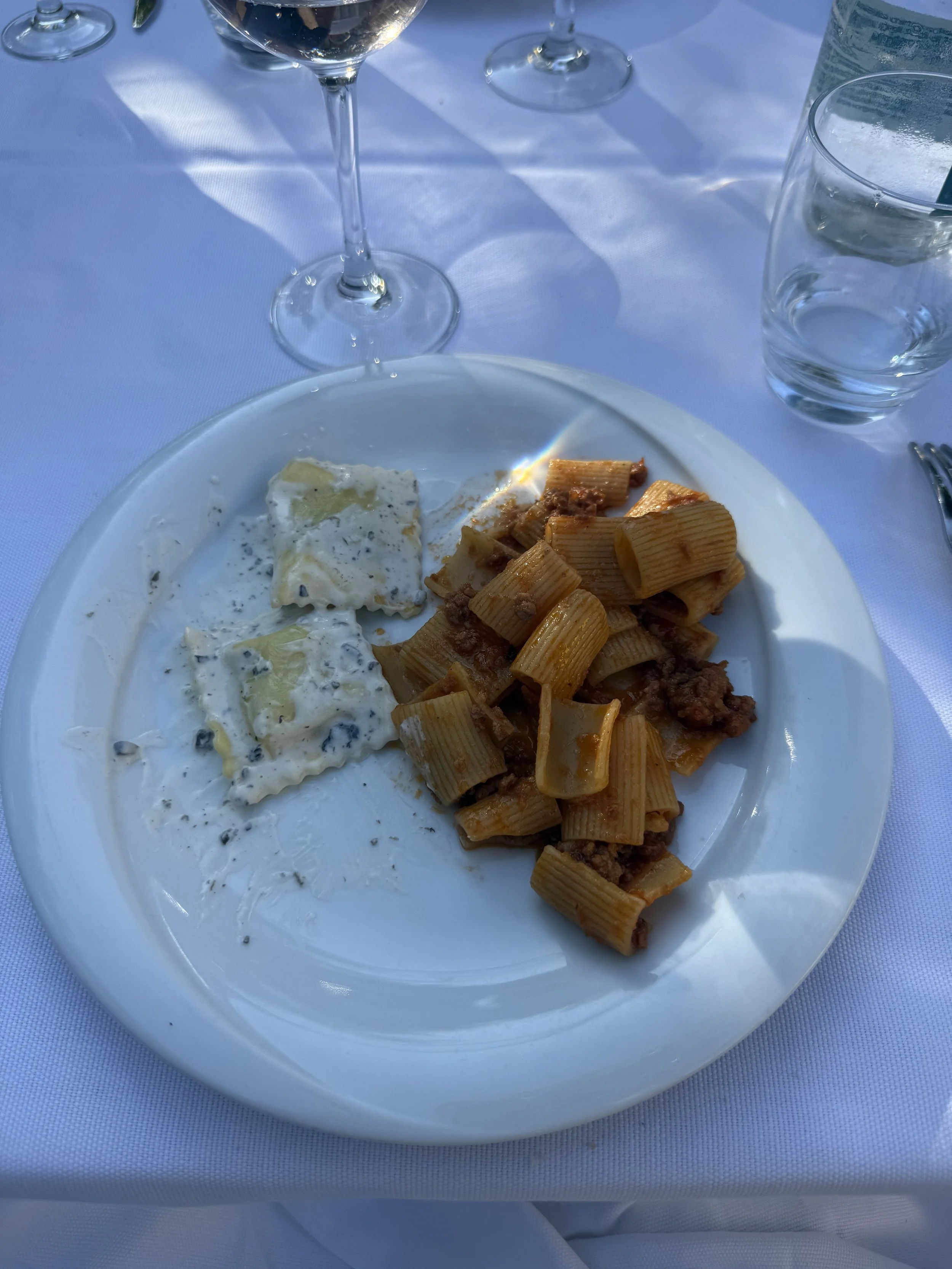
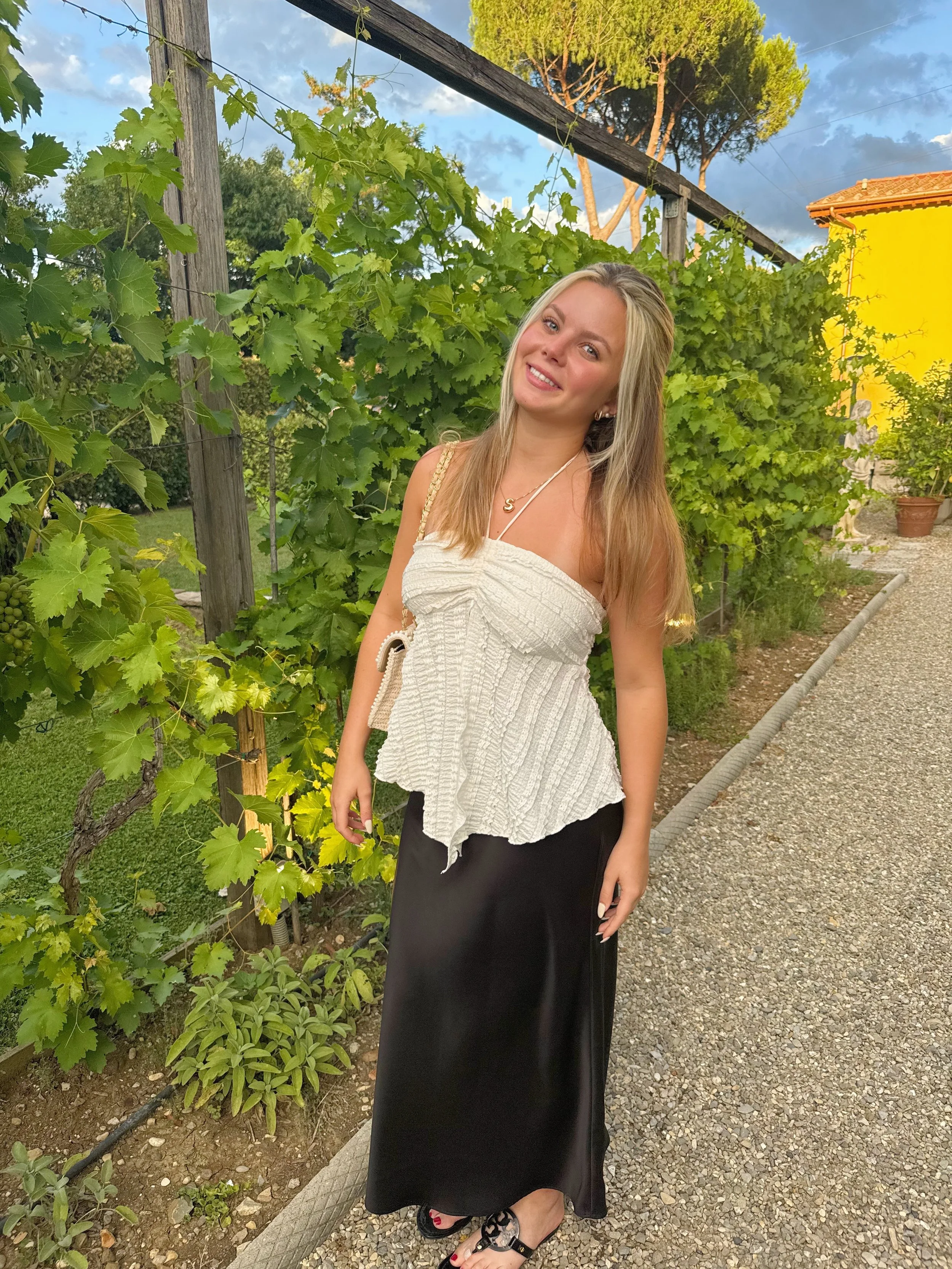
Many people get confused between both Florence and Tuscany. The difference is that Florence is inside of Tuscany and the whole area is considered Tuscany. In other words, Florence is the art capital inside the Tuscany region. Tuscany is known for its rolling hills, vineyards, medieval towns, and Renaissance cities, it offers the perfect combination of art, history, food, and natural scenery. Its capital, Florence, is often considered the birthplace of the Renaissance and is home to masterpieces by Michelangelo, Botticelli, Leonardo da Vinci, and many other celebrated artists. Tuscany is also famous for its culinary traditions. Local specialties include handmade pasta, pecorino cheese, rustic bread, olive oil, and wines such as Chianti and Brunello di Montalcino. Meals are often prepared with simple, fresh ingredients and enjoyed at a relaxed pace. We ended up driving out to a small restaurant in the vineyards of Tuscany and eating delicious and authentic Italian food.
Canals
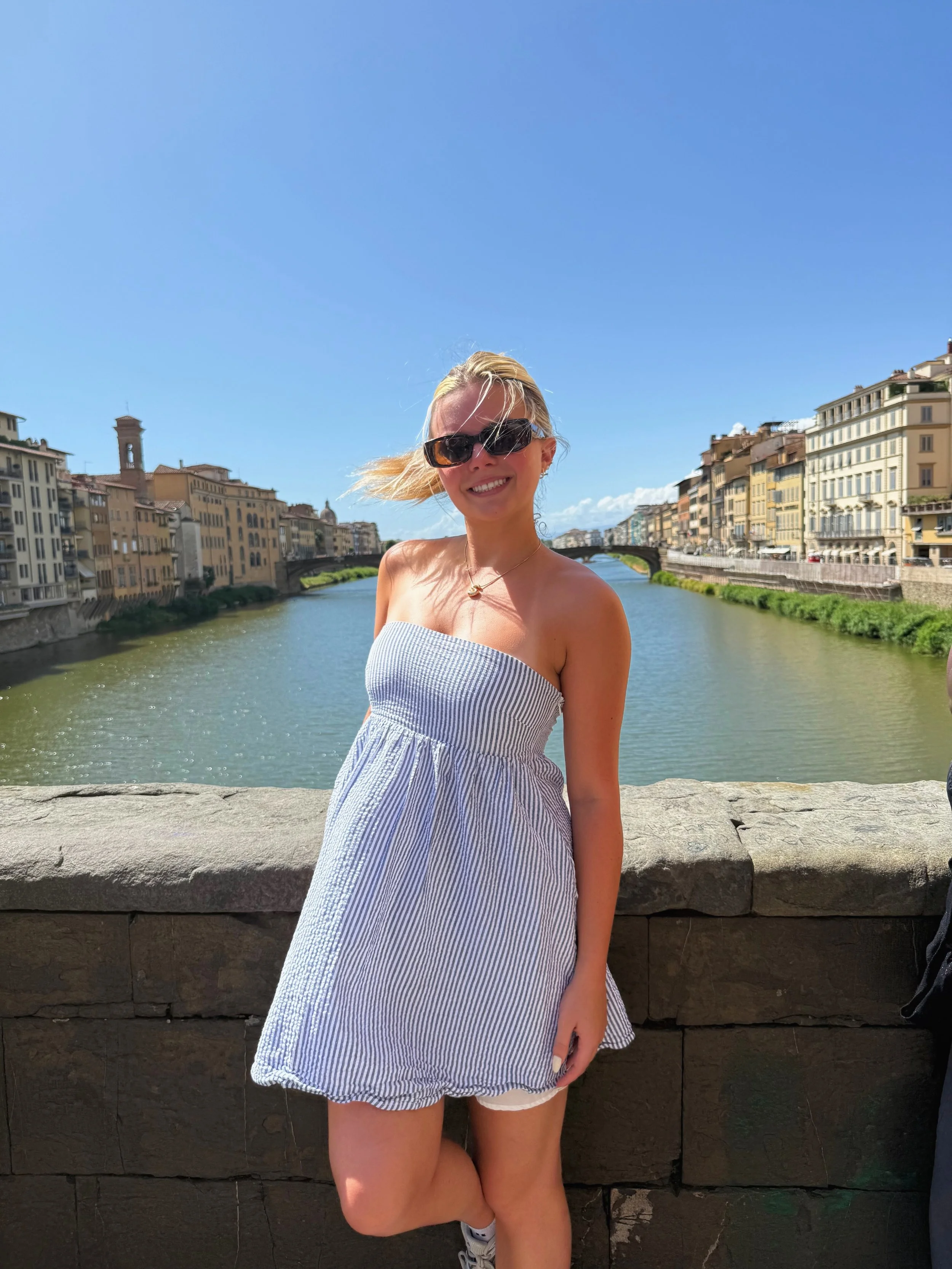
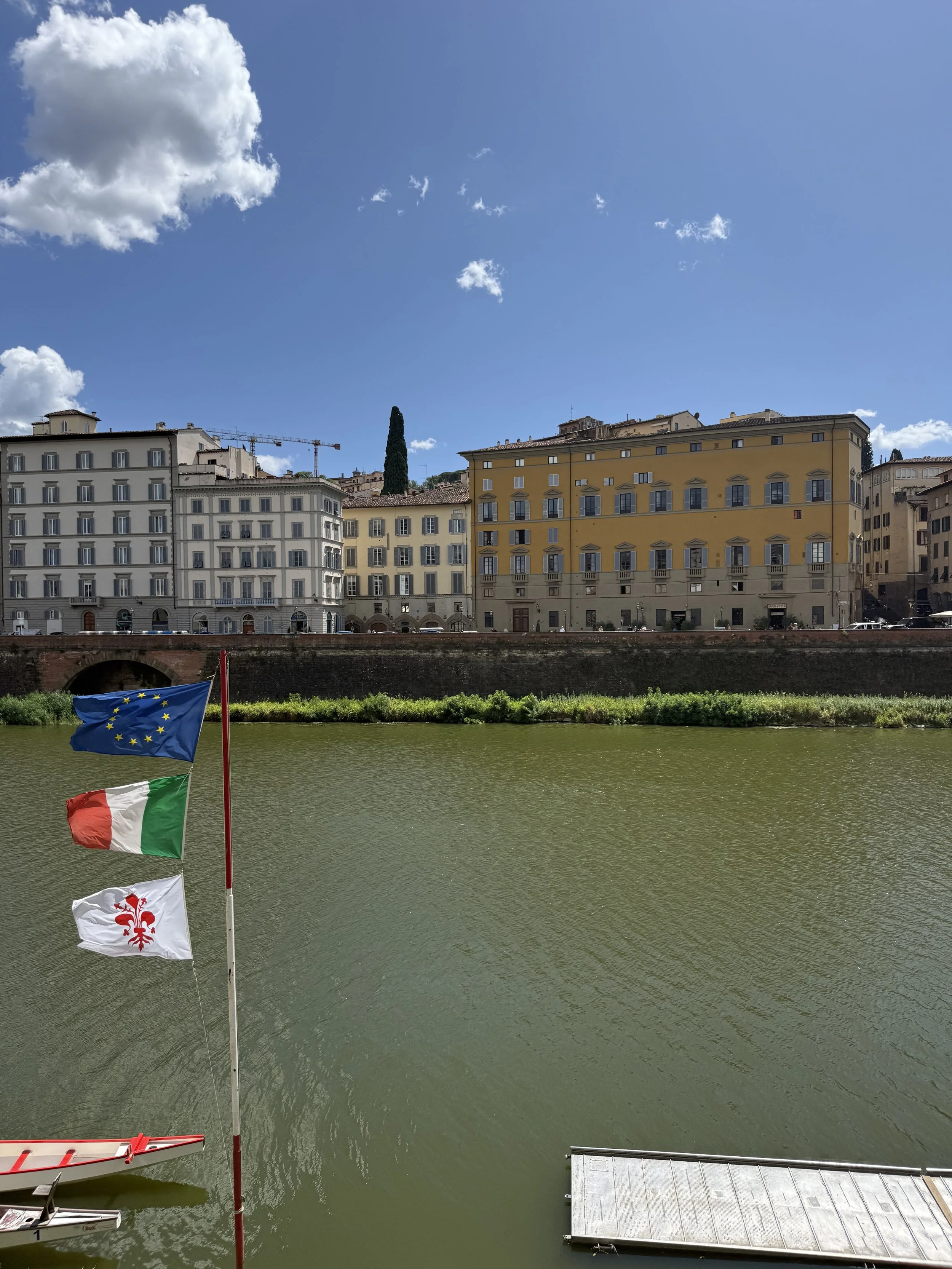
Although Florence is not known for canals in the same way as Venice, water has played an essential role in the city’s development. The Arno River flows through the center of Florence and historically supported transportation, mills, workshops, and industries such as textile production. Its famous bridges, including the Ponte Vecchio and Ponte Santa Trinita, connect the historic center with the Oltrarno district. Florence also developed a network of smaller canals and channels that redirected water from the Arno. These waterways powered mills, irrigated agricultural land, drained marshy areas, and supplied water to craftspeople. While Florence’s canals may be hidden, their history reveals how closely the city’s growth was connected to water. Walking beside the Arno today offers beautiful views of Renaissance buildings, historic bridges, and colorful reflections across the river.
Gelato
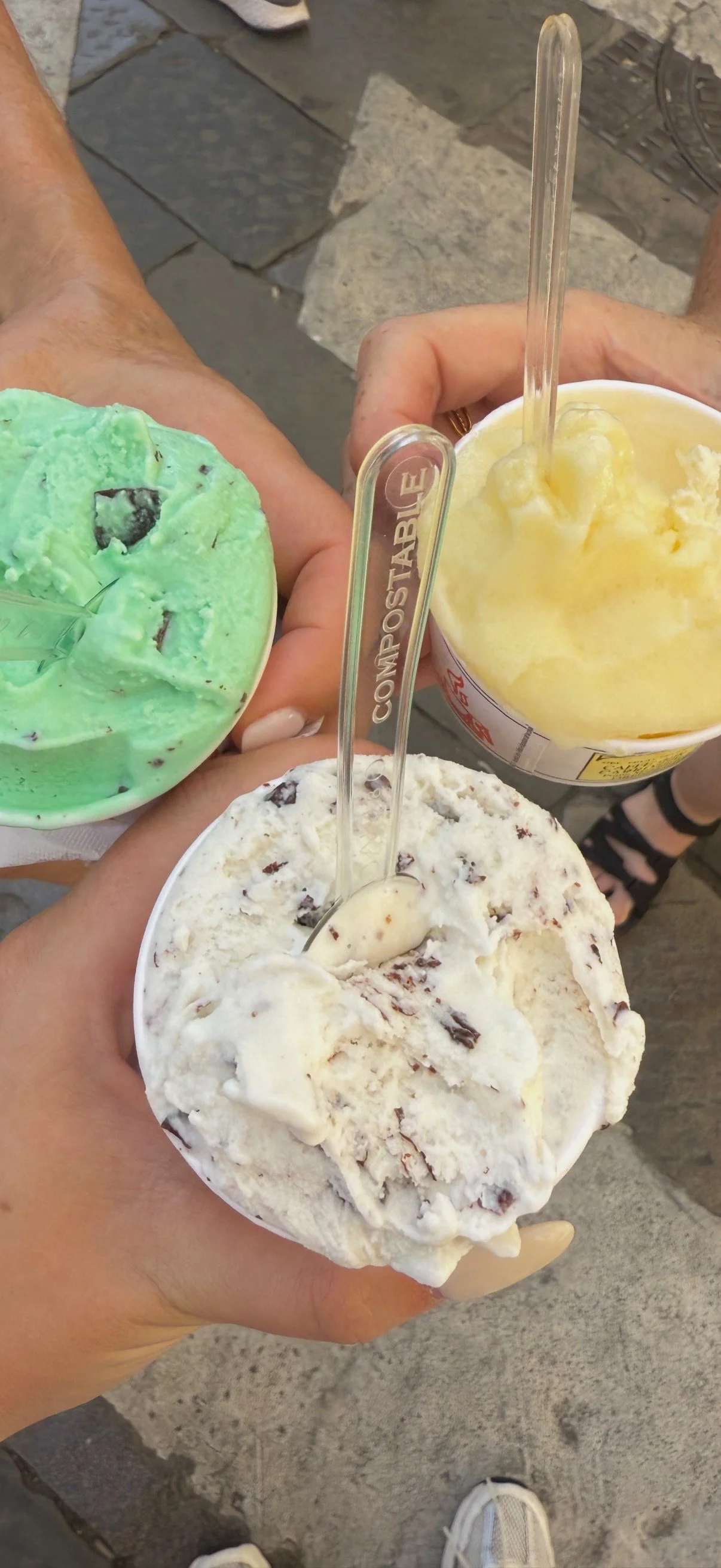
No trip to Florence is complete without tasting authentic Italian gelato. With its smooth texture and intense flavor, gelato is denser than traditional ice cream and is generally served at a slightly warmer temperature. Florence is especially connected to its history, as the city is often credited with helping popularize early versions of gelato during the Renaissance. According to tradition, Florentine artist and architect Bernardo Buontalenti created a frozen dessert for the Medici court during the 16th century. Made with ingredients such as milk, cream, eggs, and sugar, his creation is considered an important predecessor of modern gelato. Today, many Florentine gelaterias still serve crema Buontalenti, a rich flavor named in his honor. Some of the most popular flavors to try include pistachio, hazelnut, stracciatella, dark chocolate, and seasonal fruit sorbets. Look for gelato displayed in covered metal containers with natural, muted colors. Extremely bright flavors or enormous, sculpted piles of gelato can indicate artificial coloring and a less traditional product. If you are in Florence, I highly recommend trying the gelato.